
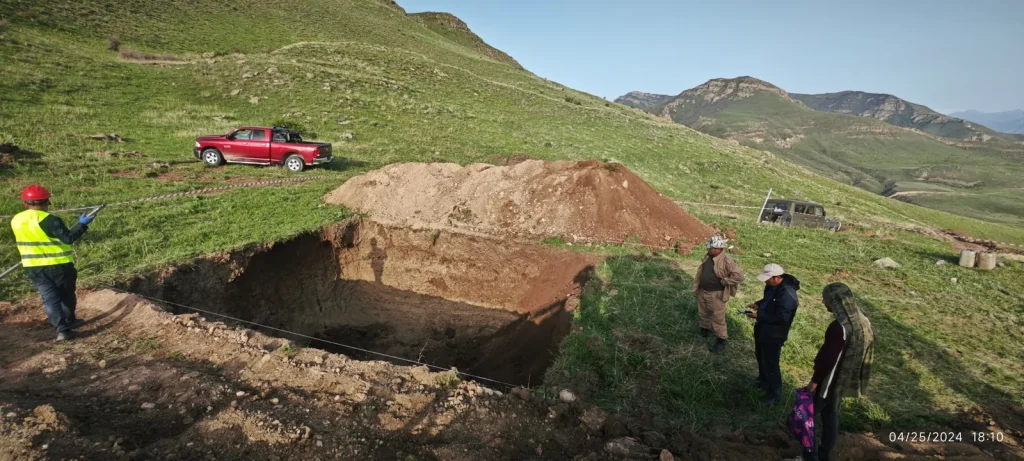
Before a seismic station can record its first earthquake, somebody has to dig a pit, pour the concrete and build a vault for the instruments. In 2024 Armenian and Chinese specialists did this work together, site after site, from the first noise survey in 2019 to the finished vault.
From the first bucket to the vault
The Armenian and Chinese teams built the stations together, in difficult conditions, often on mountain slopes. Go down into the pit step by step: drag the slider, swipe the photo or use the arrows. The photos come from several sites.
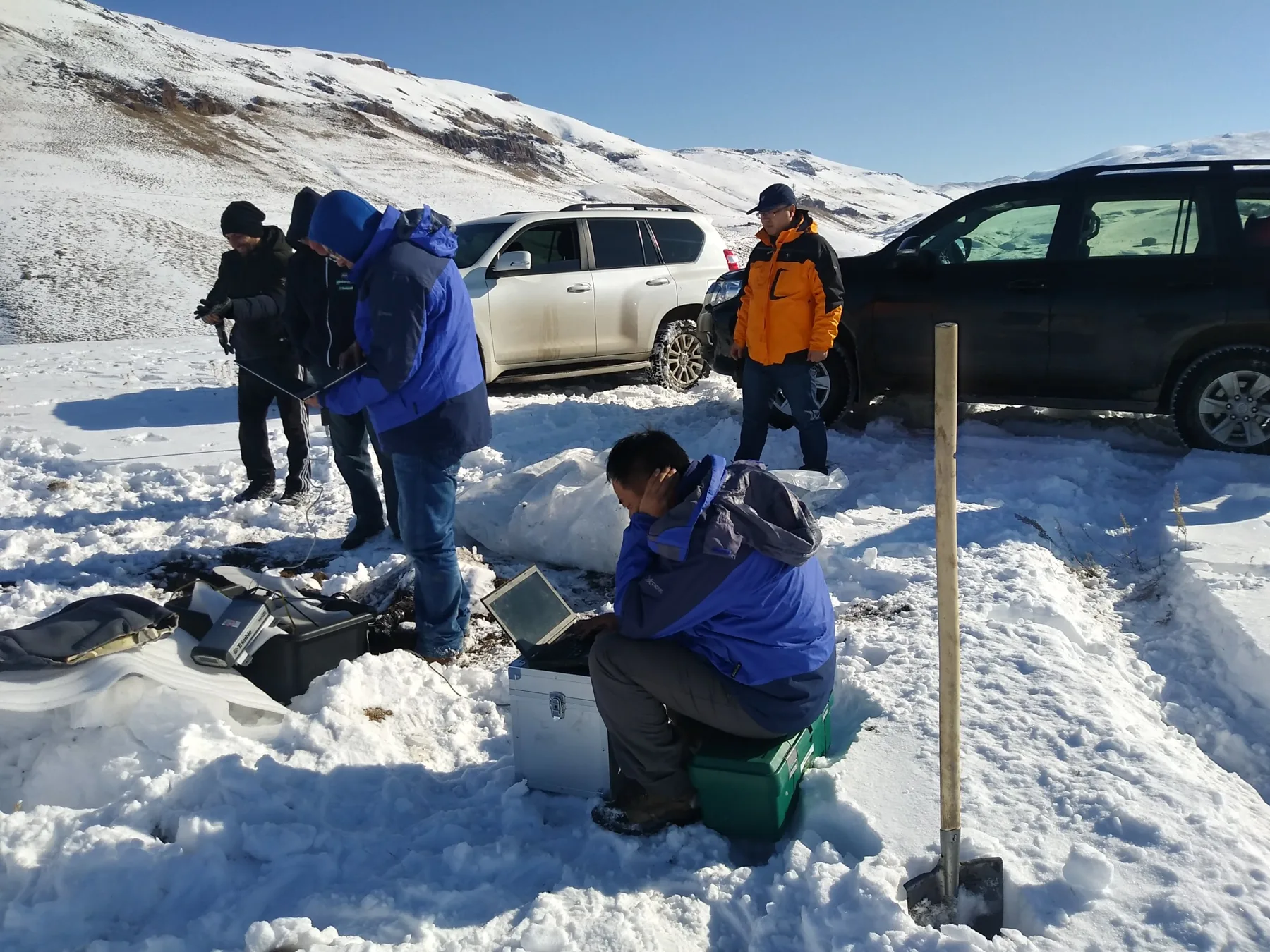
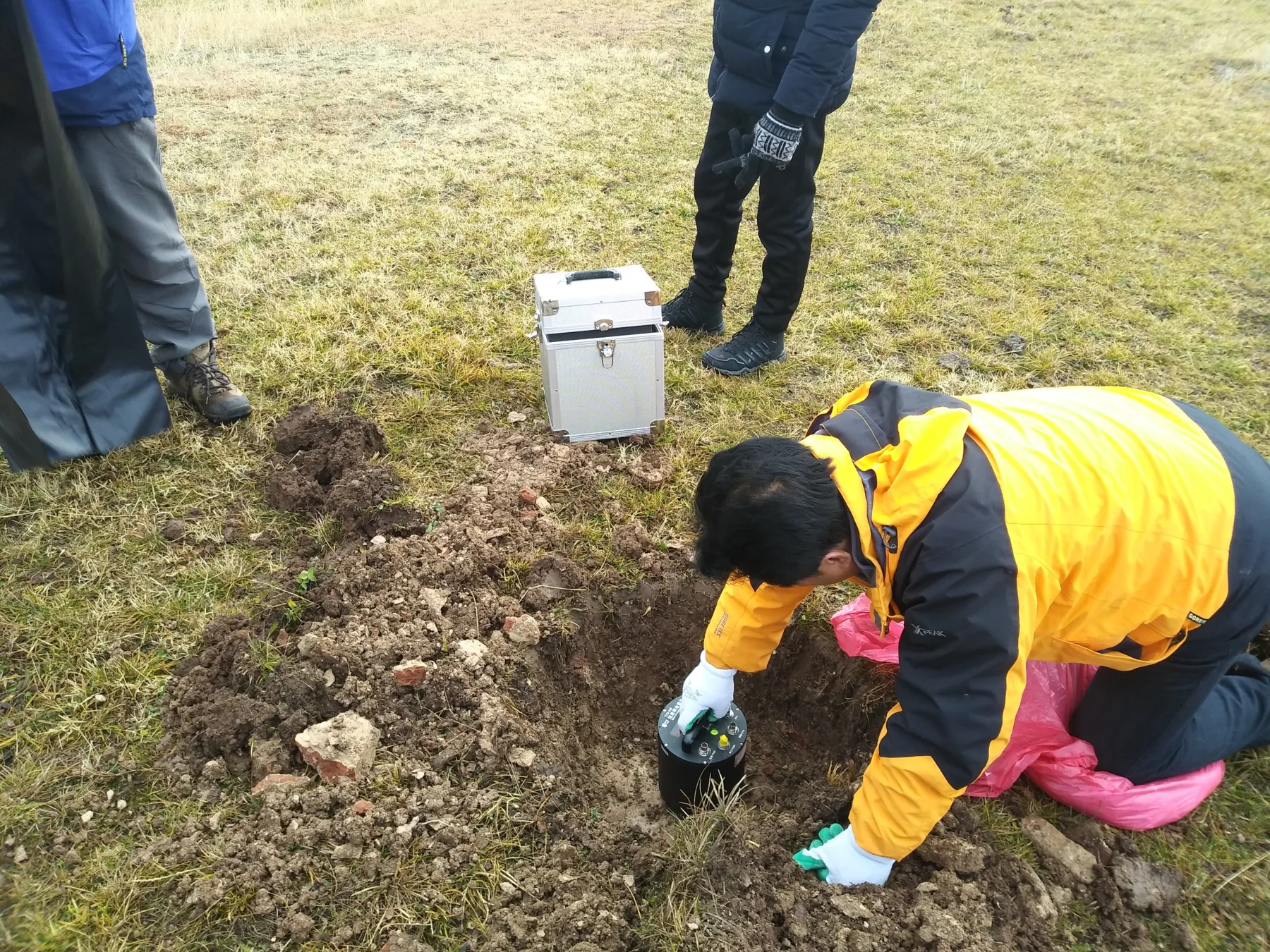
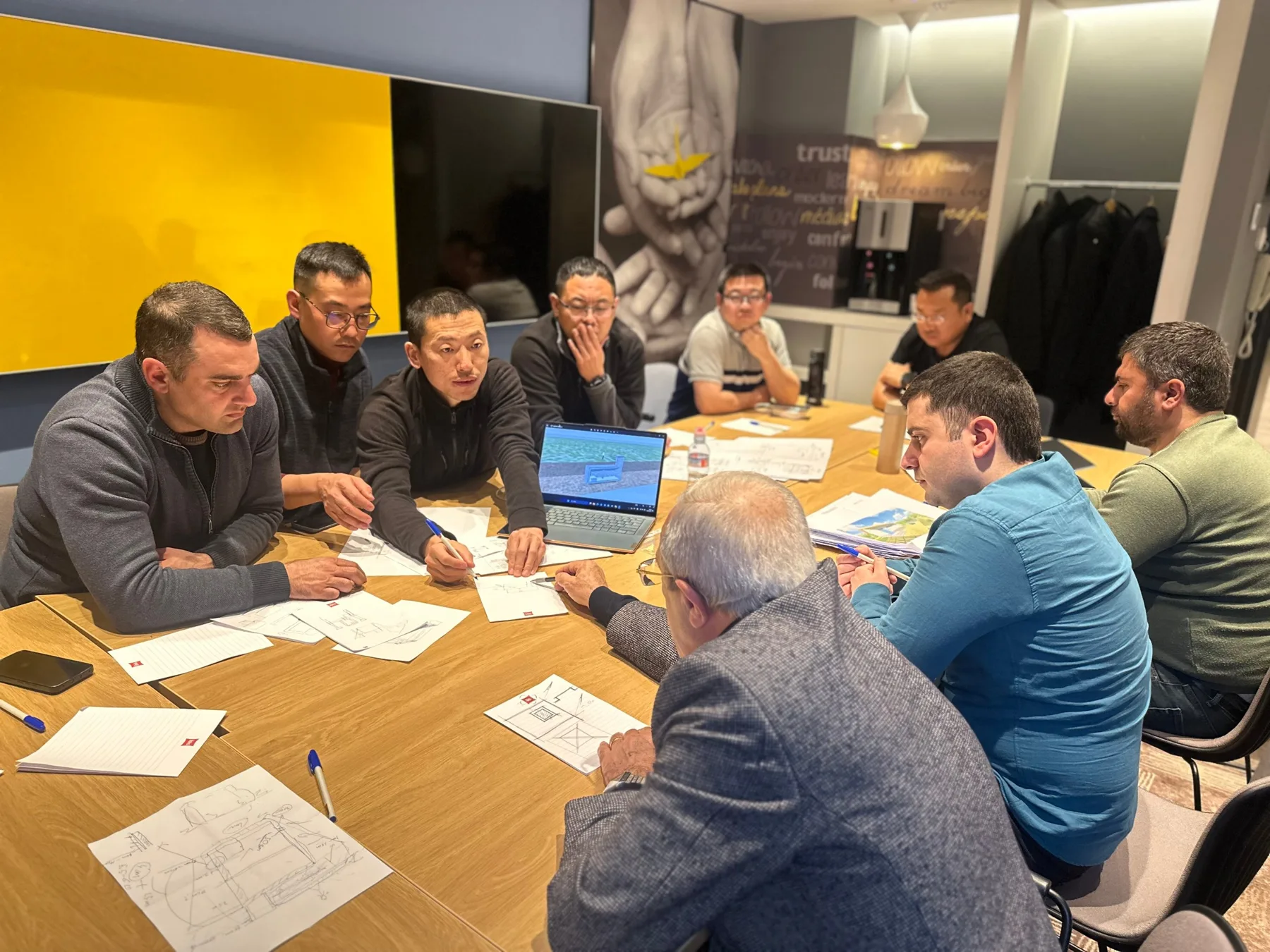

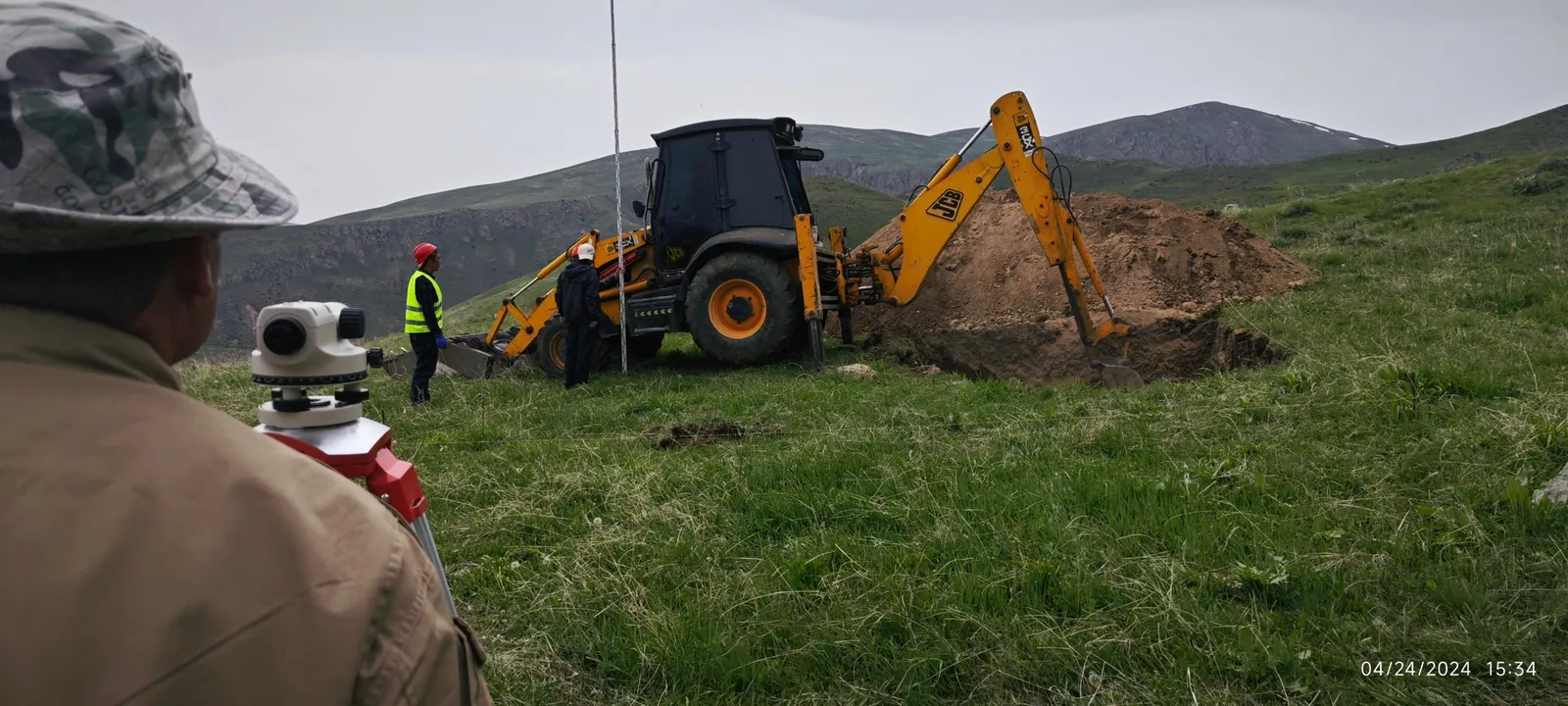
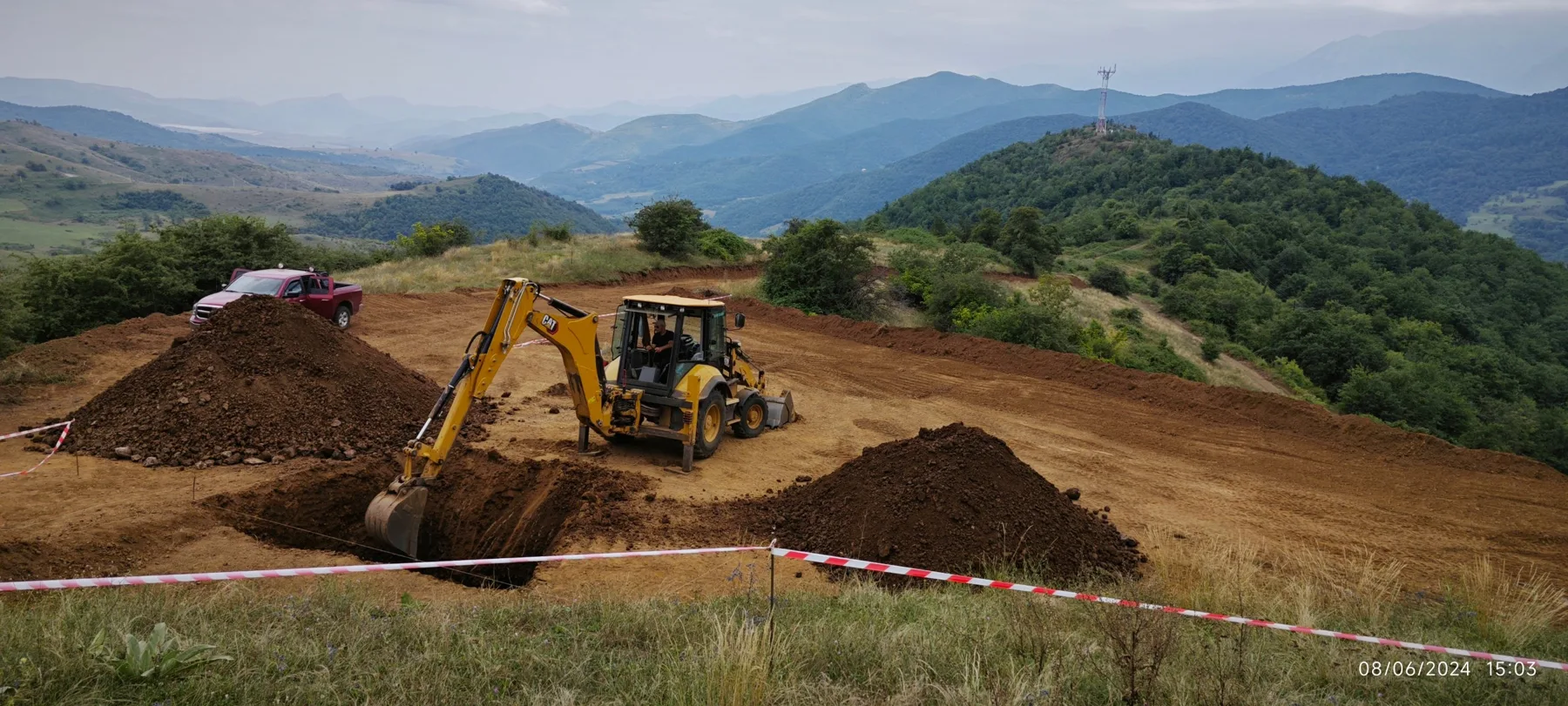
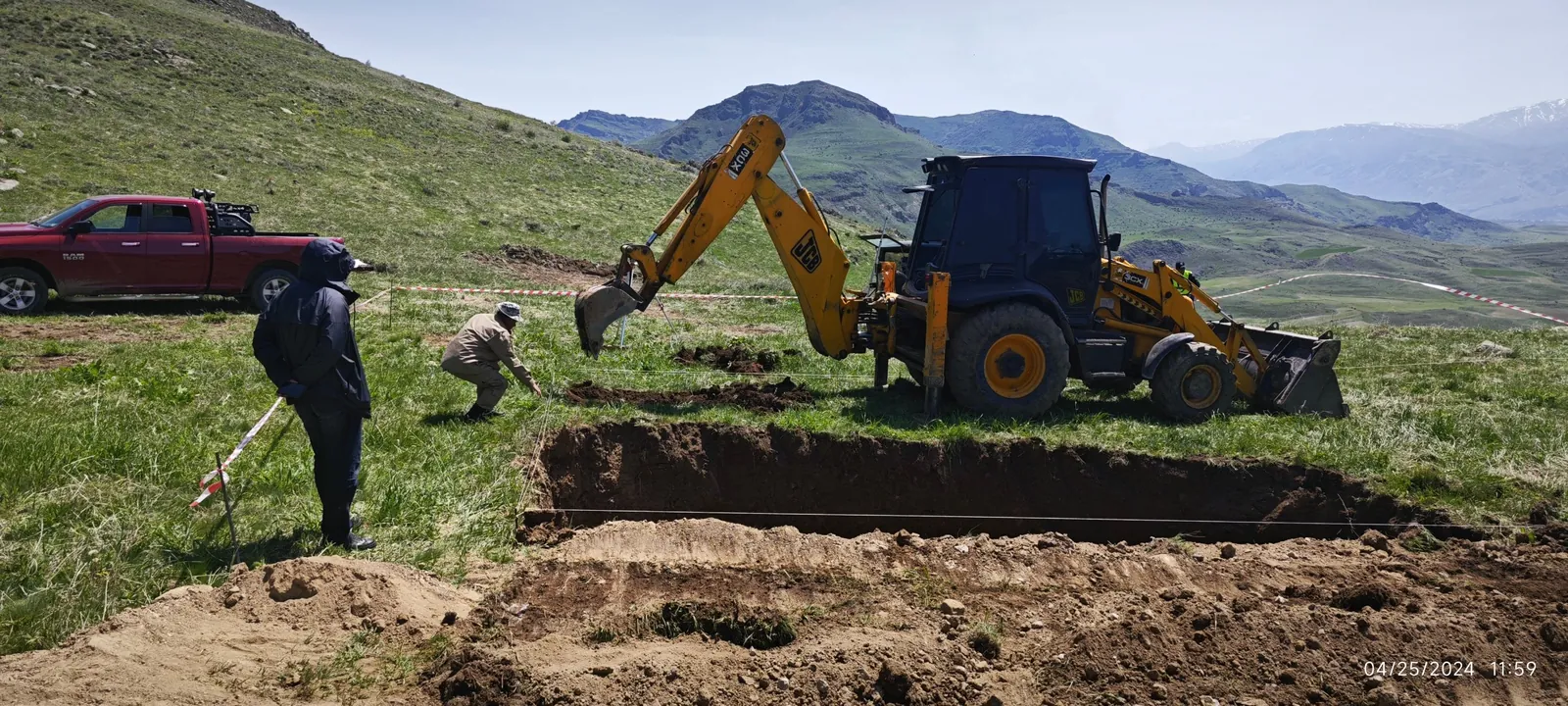
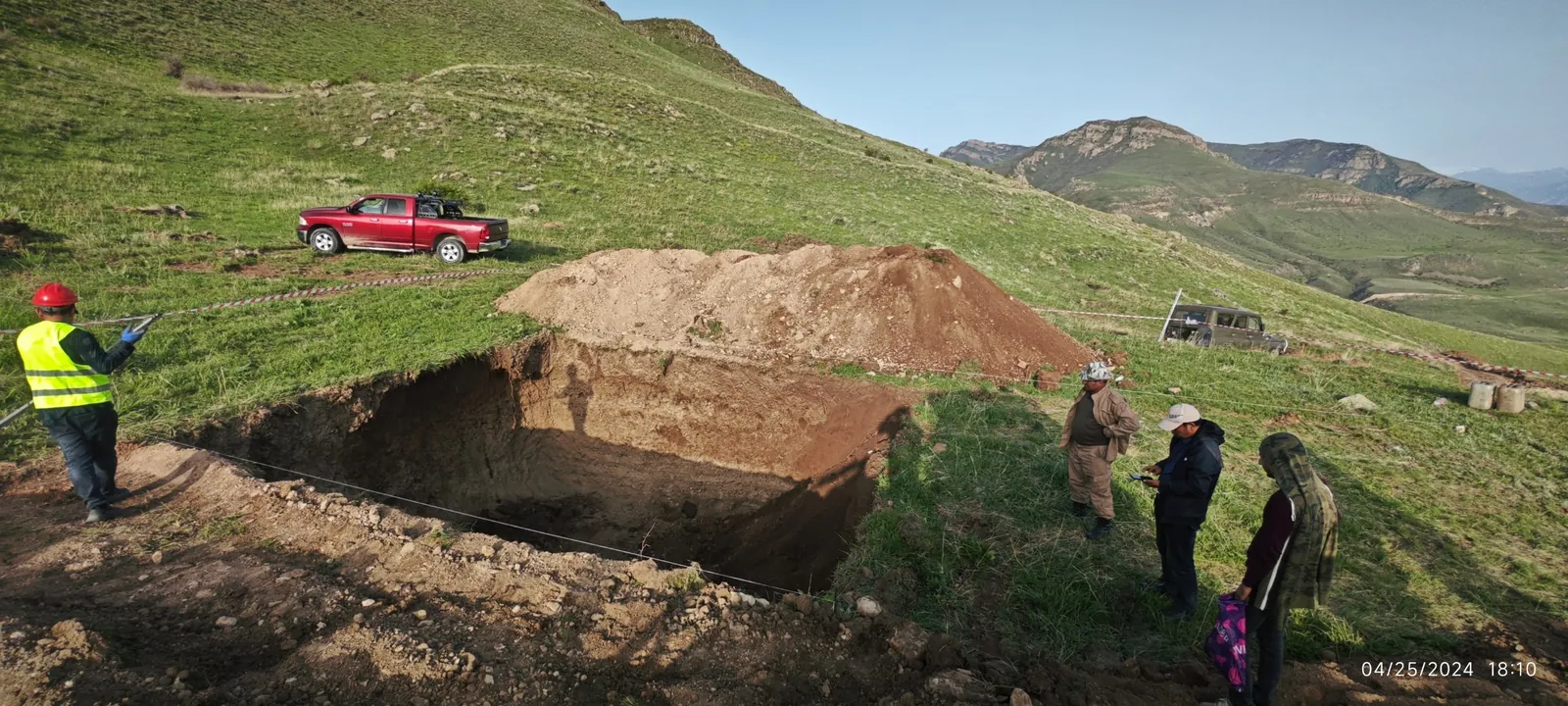
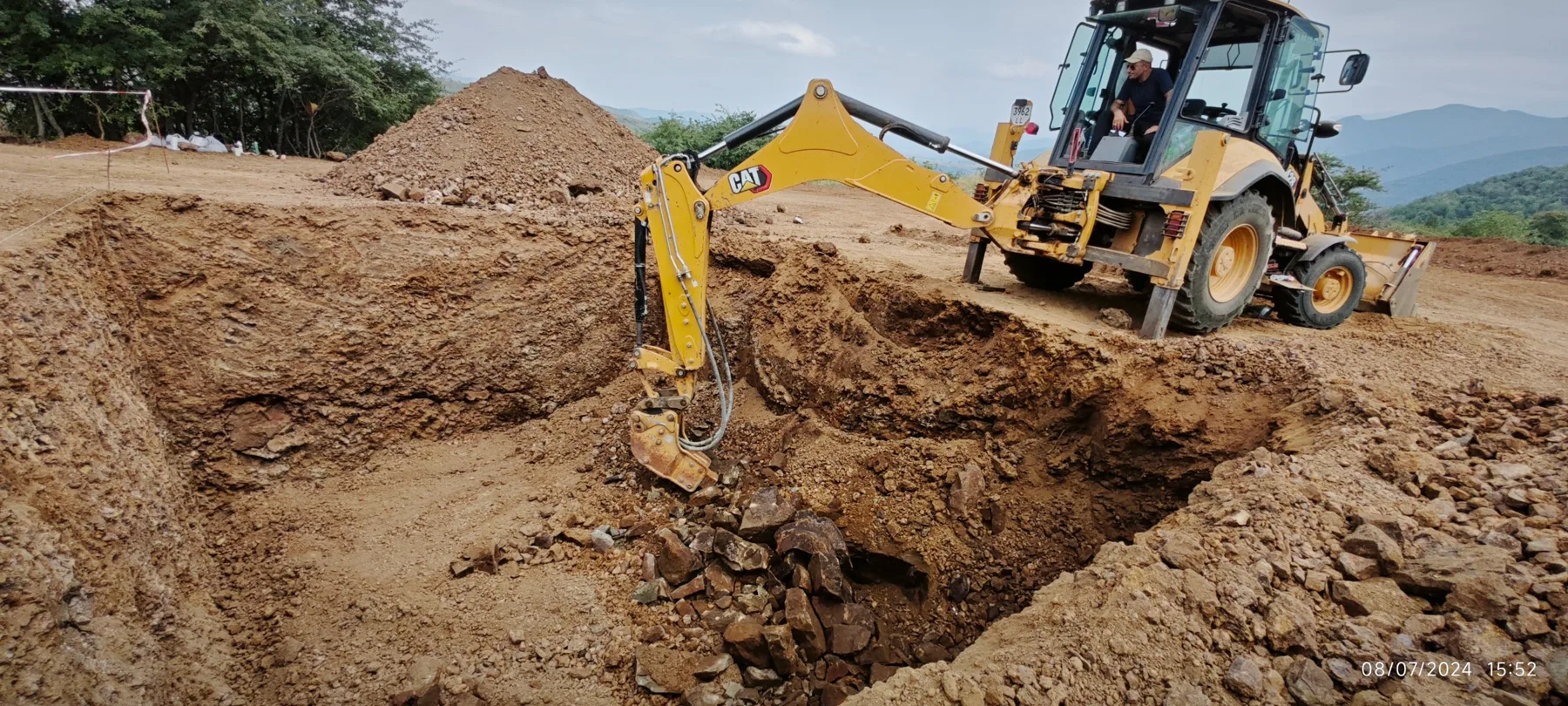
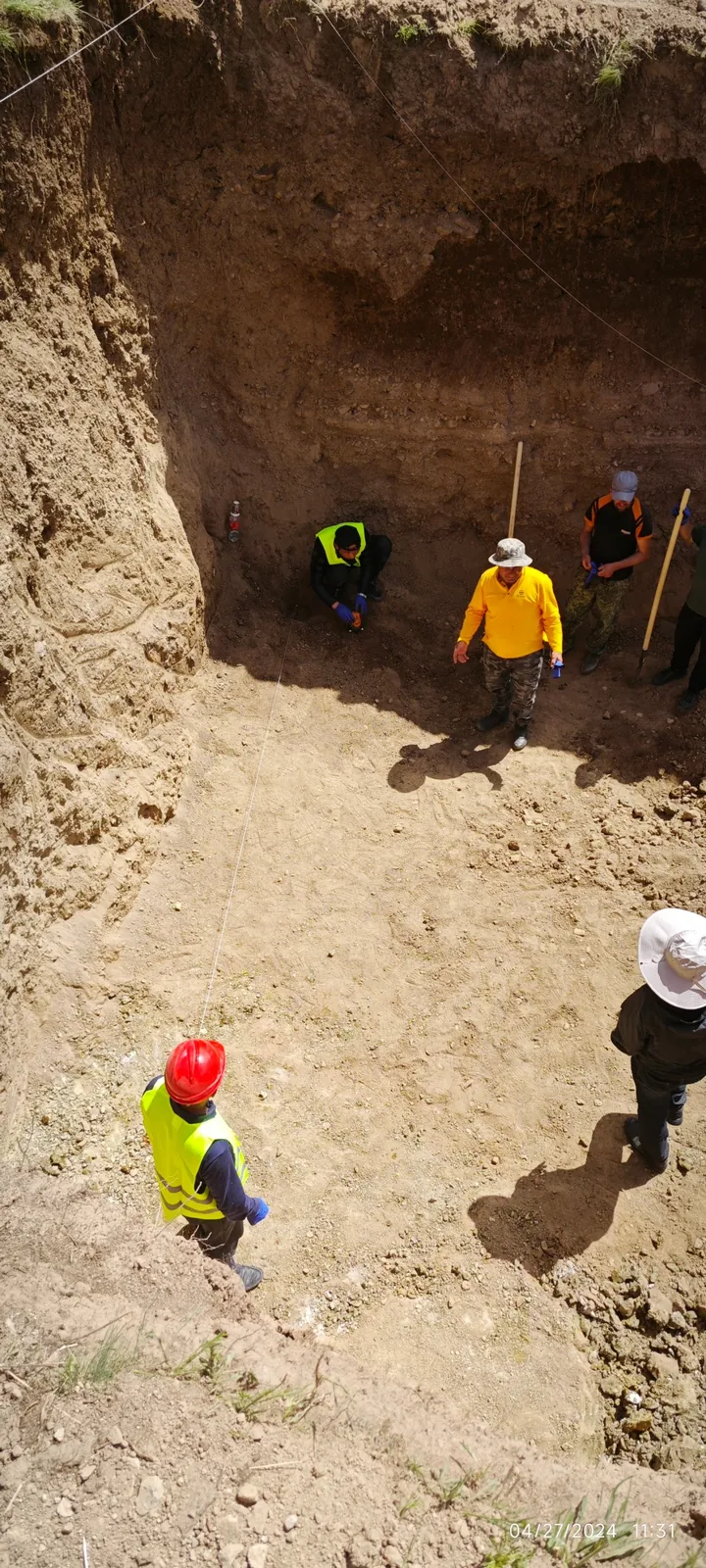
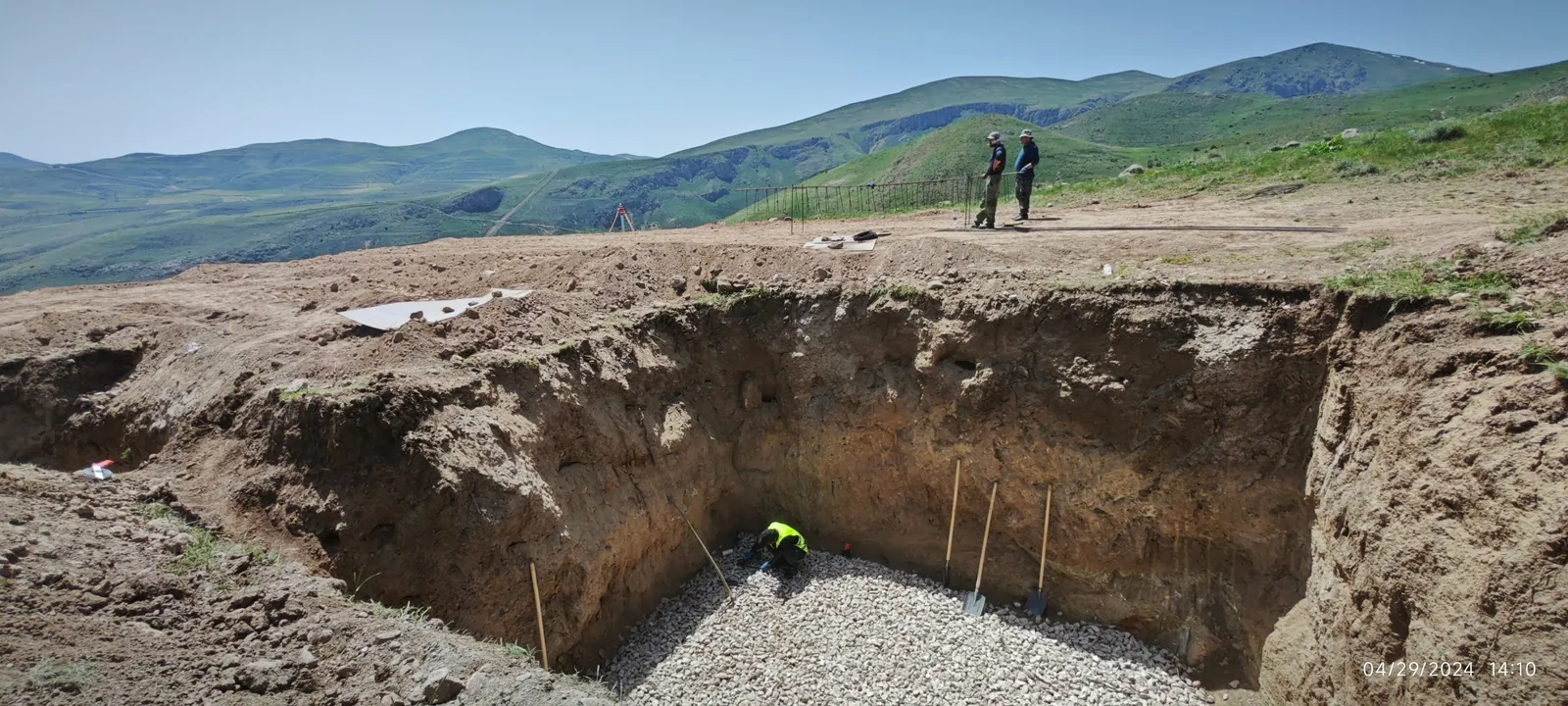
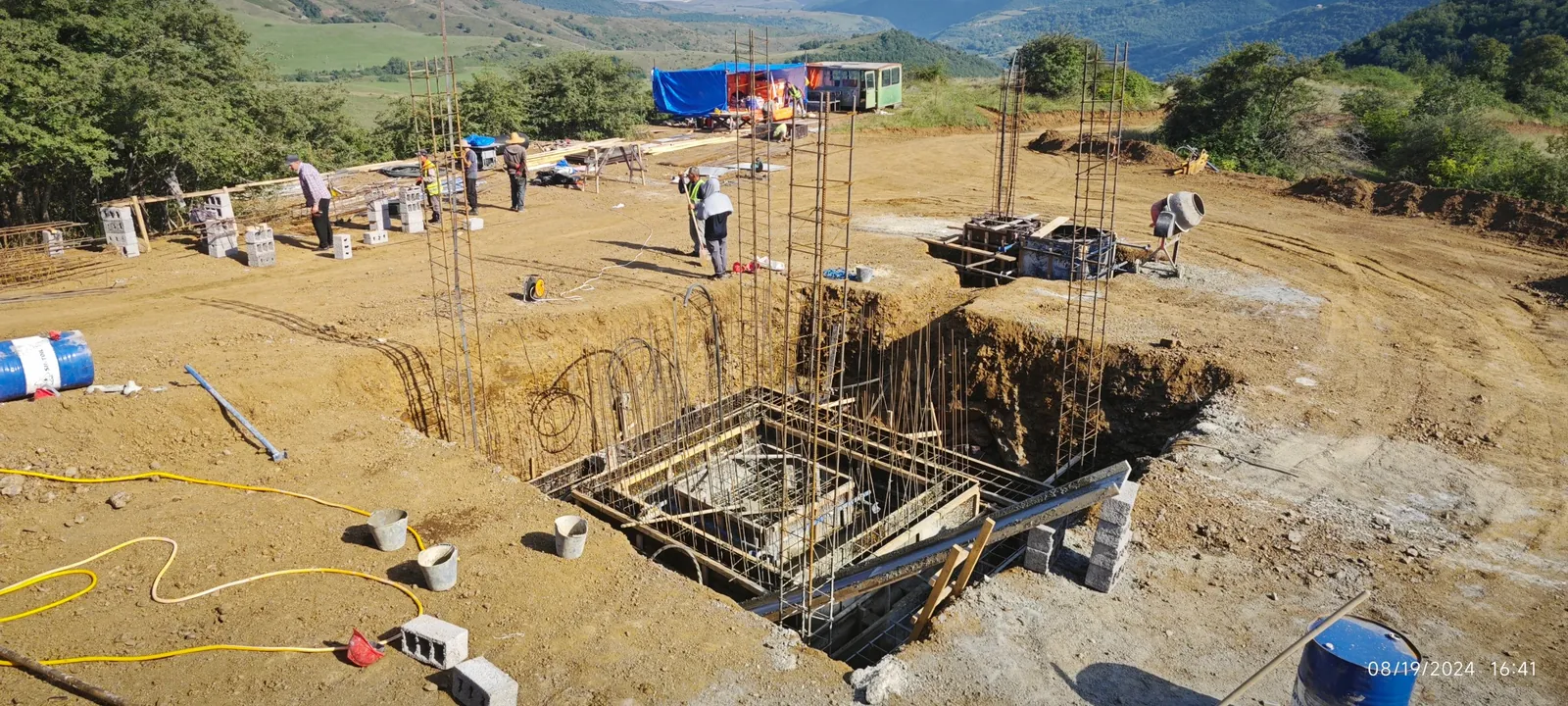
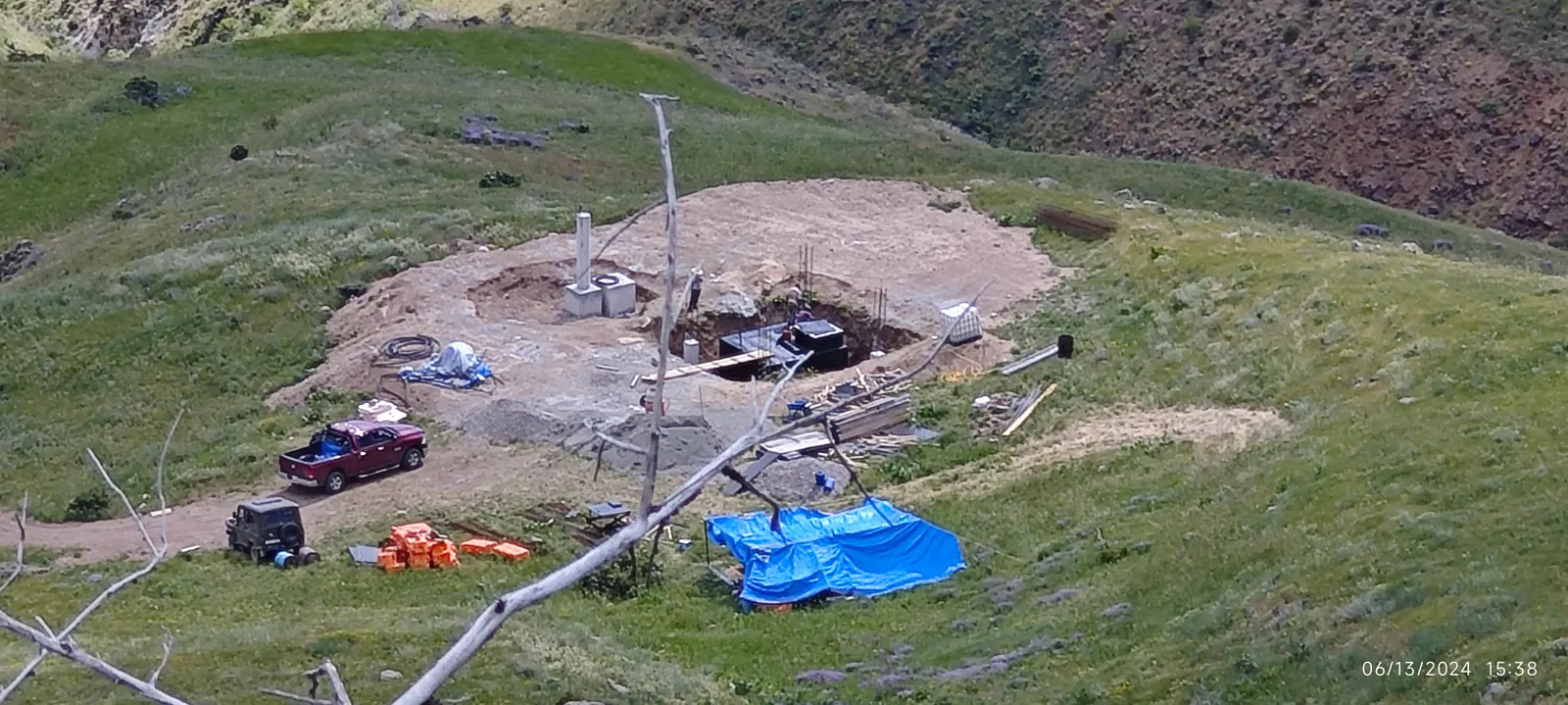
Long before the design and the first bucket, Chinese and Armenian seismologists measured the noise at every candidate site. A good station must stand in a quiet place.
No two pits were the same
Every site had its own ground, and each one asked for a different tool. Tap a card to see what the team met there.
Today these vaults hold the instruments of the CHARNET network, which sends its data to Gyumri in real time. Every record on this site begins with this work.