Armenia and China
Gyumri · Armenia · since 1961
Ministry of Education, Science, Culture and Sport of the Republic of Armenia
Institute of Geophysics and Engineering Seismology after A. Nazarov
Physics of the Earth · Earthquake science
Earthquake of 8 March 2025, ML 4.8: epicentre, CHARNET stations and the record at station SHIK
Live
New · PuzzleForeshock or twin?
New · PuzzleForeshock, main shock, aftershock?
New · PuzzleCan a seismometer hear far and near at the same time?
NewA night tremor near Eranos
NewA deep earthquake under Japan
NewAn earthquake nobody felt near Vanadzor
NewArmenian stations record the Mw 7.0 earthquake in Tibet
NewCHARNET records a small earthquake near Armavir
InnovationNew developments: synthetic accelerograms and magnetic precursors
Research
-
Earthquake monitoring and seismicity
Where, when and why earthquakes happen. Real-time location of events, the national catalogue and bulletin, and studies of earthquake sources, aftershocks and seismic cycles in the Caucasus collision zone.
Laboratory Seismology and earthquake prediction
-
Geophysical data science and AI
Turning continuous geophysical records into knowledge: machine learning for detecting and characterising earthquakes, numerical modelling of geophysical fields and well-curated open data.
Laboratory Mathematical geophysics and geoinformatics
-
Geophysical instruments and metrology
Reliable observations start with reliable sensors: design, testing and calibration of seismic, strong-motion and water level instruments for networks, boreholes and structures.
Laboratory Geophysical instrument engineering and metrology
-
Seismic hazard and ground motion
From earthquake sources to expected shaking: probabilistic and scenario-based hazard, ground-motion models, site effects and microzonation that support building codes and land-use planning.
Laboratory Engineering seismology, analysis of seismic actions and seismic hazard assessment
-
Earthquake engineering and structural resilience
How the built environment responds to earthquakes: structural dynamics, vibration testing and instrumental monitoring of buildings, bridges and dams, and assessment of unstable slopes.
Laboratory Seismic resistance of structures and building constructions
-
Exploration and applied geophysics
Imaging the subsurface for safe construction and sustainable use of resources, from site investigations for buildings and dams to regional and mining geophysics.
Laboratory Exploration geophysics
-
Crustal structure and geodynamics
Why the crust beneath Armenia deforms: deep structure of the lithosphere, active faults and present-day motions within the Arabia–Eurasia collision zone.
Laboratory Structural geophysics, deep processes and geodynamics
-
Geomagnetism and space weather
The Earth’s magnetic field from seconds to millennia: continuous observatory measurements, geomagnetic variations, space weather and paleomagnetism.
Laboratory Geomagnetism
-
Groundwater, environment and precursors
Groundwater as a sensor of the crust: long-term monitoring of wells and boreholes, multi-parameter studies of earthquake precursors and environmental geophysics.
Laboratory Hydrogeodynamics and environmental geophysics
Structure of the institute
Select a branch to see its units.
IGES
Director · Scientific Board · Directorate
Research laboratories
Nine laboratories carry out the research directions above, from structural geophysics and seismology to engineering seismology and instrument engineering.
Network, centres and observatory
Since 2024
Joint Geoscience Centre
Xi’an Center of Geological SurveyChina Geological SurveyGyulagarak, Lori region
Complex geophysical observatory
Geomagnetic observatory GLKGyulagarak, Lori region Geodynamic test siteWith JINR, DubnaEducation and support
- Specialization board 040 “Geophysics”
- Master’s and postgraduate studies
- Library
- Production workshop
- Earthquake Science Museum
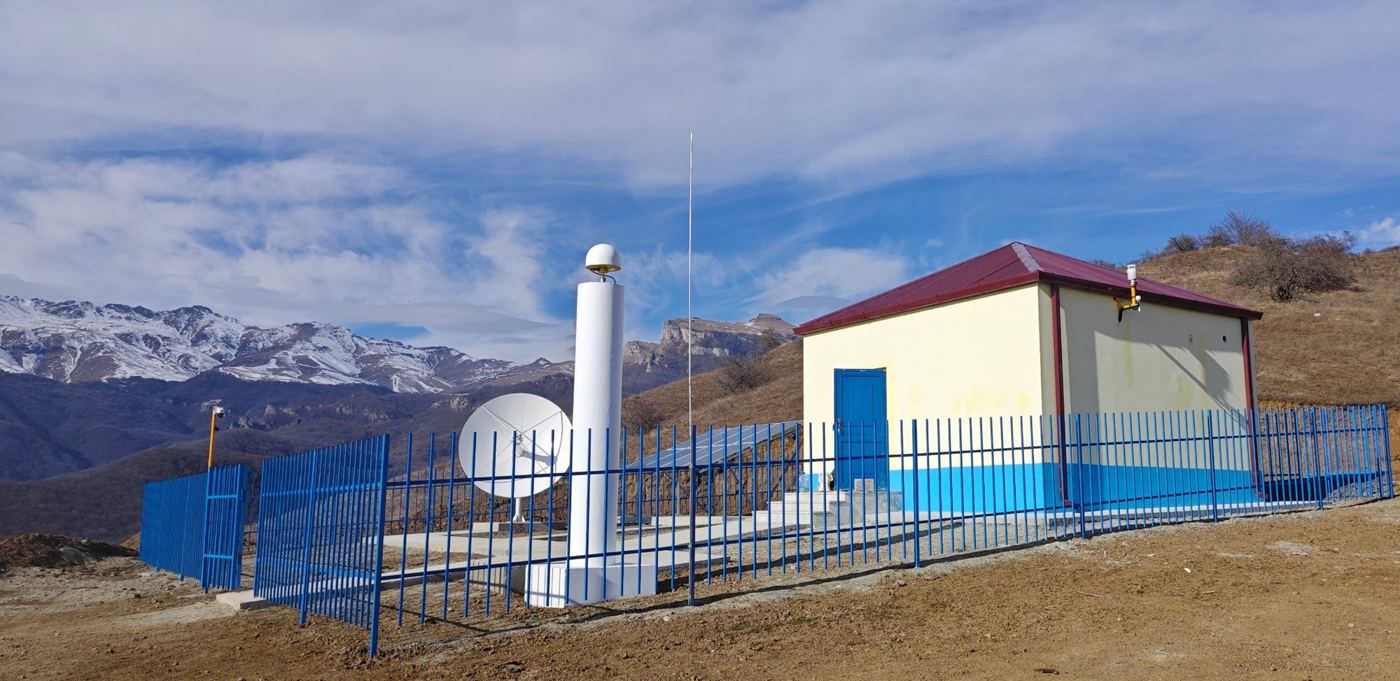
CHARNET monitoring network
China–Armenia Seismic, Strong-Motion and Geodynamic Network
The Armenian–Chinese network works together with the Institute of Geophysics, China Earthquake Administration, Beijing. Nine stations across Armenia stream data in real time to the Gyumri data centre, which also runs earthquake early warning.
- 5
- integrated stations: broadband seismometer, accelerometer, GNSS, weather sensor
- 4
- short-period stations
- 1
- data centre in Gyumri with early warning
Real-time Magnetic Observatory
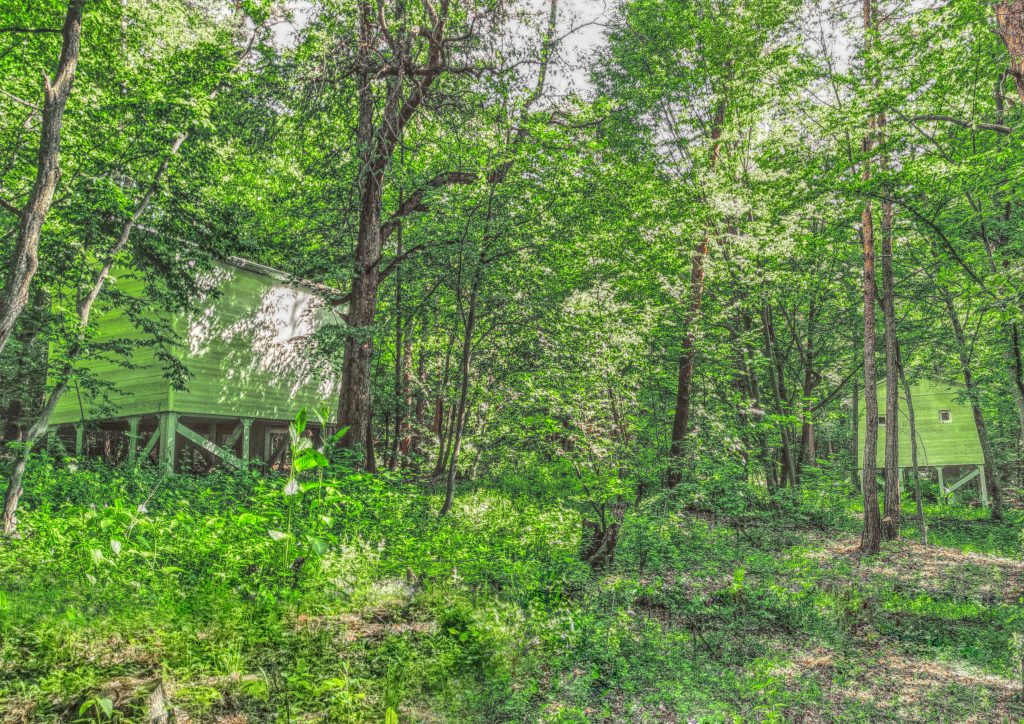
Continuous recording of the Earth’s magnetic field in Gyulagarak, Lori region. The Armenian–Russian observatory publishes its data openly.
- IAGA code
- GLK
- Address
- Gyulagarak, Lori region
- Coordinates
- 40°56′14.3″ N, 44°28′29.6″ E
- Open data
- DOI 10.2205/GLK2020
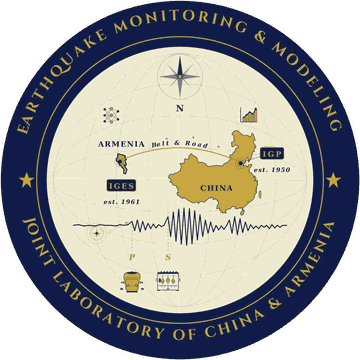
Joint Laboratory of China and Armenia for Earthquake Monitoring and Modeling
The laboratory unites IGES (founded in 1961) and the Institute of Geophysics, China Earthquake Administration (IGP, founded in 1950) in earthquake monitoring, data analysis and modelling.
IGES 1961IGP 1950
News
All newsA night tremor near Eranos
A small earthquake (ML 1.3) 15 km north-west of Eranos in Gegharkunik province, recorded by the CHARNET network at 03:11 local time on 26 October.
A deep earthquake under Japan
A magnitude 6.5 earthquake 490 km beneath the Bonin Islands, south of Japan. Its waves reached Armenia, 8,400 km away, in less than eleven minutes.
An earthquake nobody felt near Vanadzor
A magnitude 1.4 earthquake between Spitak and Vanadzor went unnoticed by people, but our stations heard it within seconds. The growing gap between P and S waves shows how the epicentre was found.
Find us
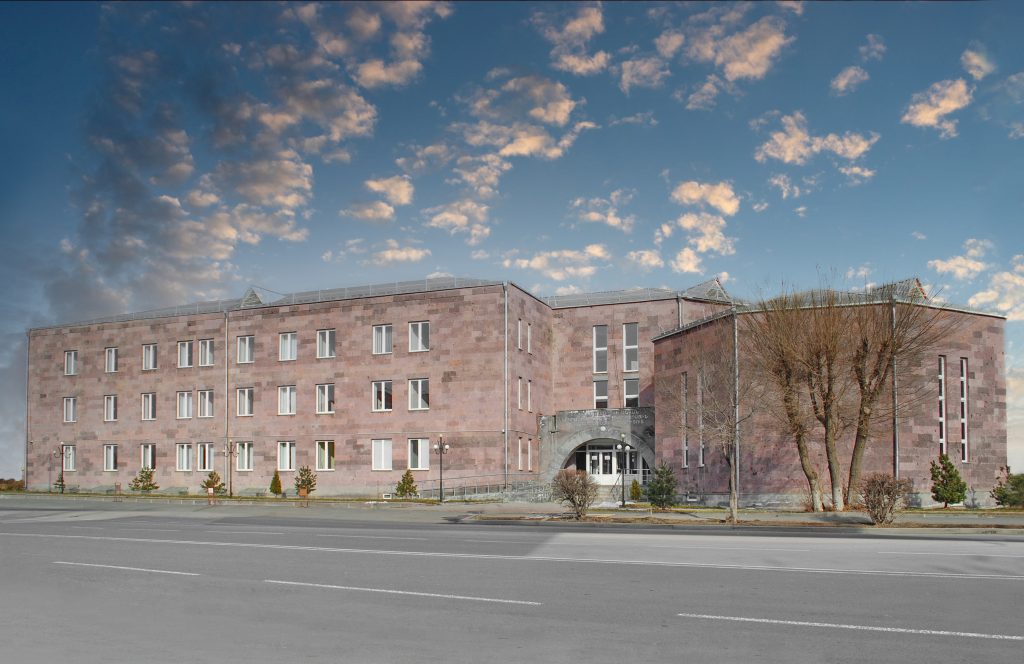
- Address
- 5 V. Sargsyan St, Gyumri, Armenia
- Phone
- (+374 312) 31261
- Coordinates
- 40°48′32.0″ N, 43°50′46.3″ E
Write to us
Your message goes directly to the institute’s official address. We will reply by email.
iges@sci.am