Byurakan, under the telescopes
Slope of Mount Aragats · Byurakan Astrophysical Observatory · Aragatsotn province
- Coordinates40.347° N, 44.275° E
- NetworkCHARNET · seismic and GNSS
- Altitudeabout 1,400 m
Where astronomers look up and seismologists listen down
The second station in our series stands in a very special place: on the grounds of the Byurakan Astrophysical Observatory, a national treasure of Armenia, on the slope of Mount Aragats, right on the red volcanic tuffs of the mountain. Here the telescopes look into distant galaxies, and right next to them our instruments listen to the Earth beneath our feet.
On the slope of Aragats
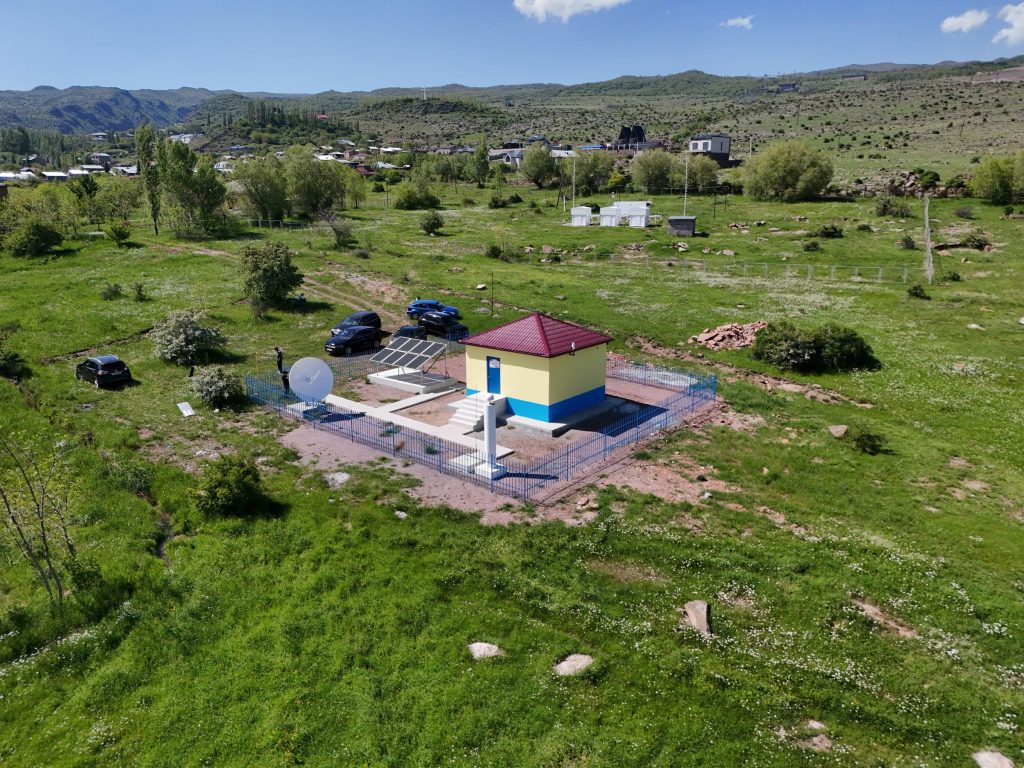
Aragats is the highest mountain of Armenia, a huge extinct volcano. Its slopes are built of lava and tuff, and around Byurakan the ground is the warm red tuff typical of the mountain. In spring the meadow around the station is green and yellow with buttercups, in early summer it turns white with daisies, and the view opens onto the hills of Aragatsotn. On clear days Mount Ararat rises on the horizon.
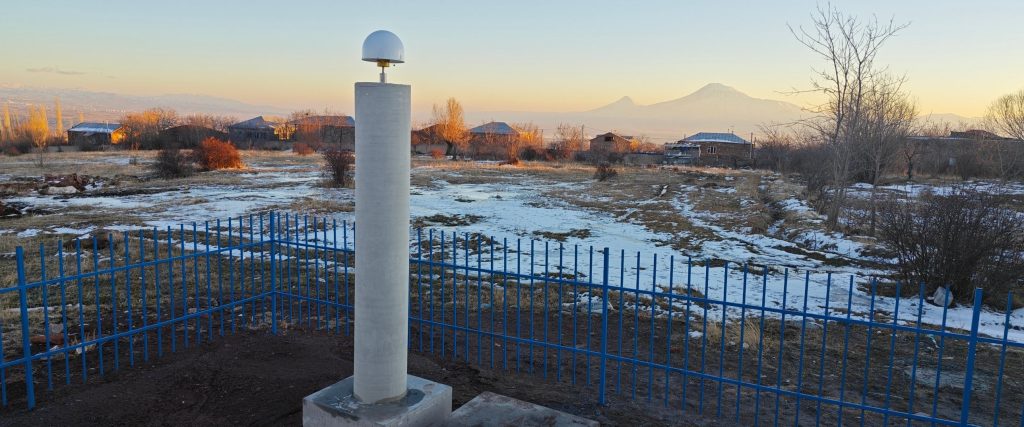
Next door: the Byurakan Observatory
The Byurakan Astrophysical Observatory, a national treasure of Armenia, was founded in 1946 by Viktor Ambartsumian and today bears his name. It stands at about 1,400 metres on the slope of Aragats; its main instrument is a 2.6-metre telescope. In 1965 the observatory began the First Byurakan Survey, which found about 1,500 galaxies with unusually strong ultraviolet light, now known around the world as Markarian galaxies. The Byurakan spectral survey is included in UNESCO’s Memory of the World register.
It is a rare neighbourhood: one institute studies the sky, the other the ground. Both need the same thing from this place — quiet. Far from city noise and lights, the telescopes see fainter stars and the seismometers hear weaker earthquakes.
The station
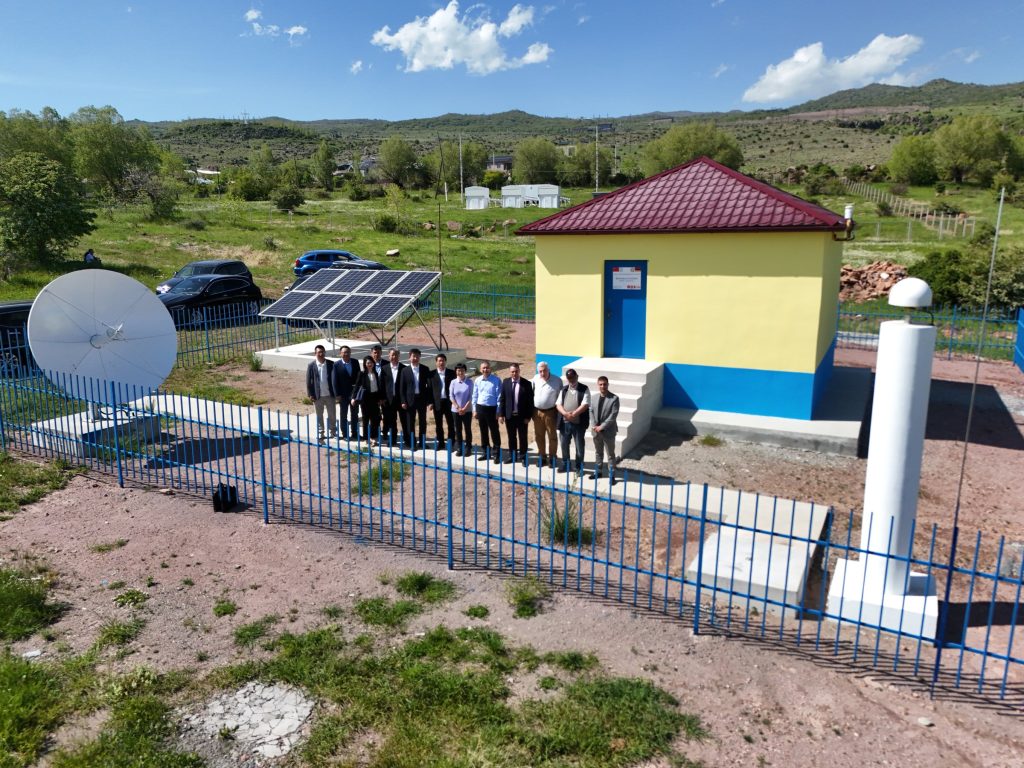
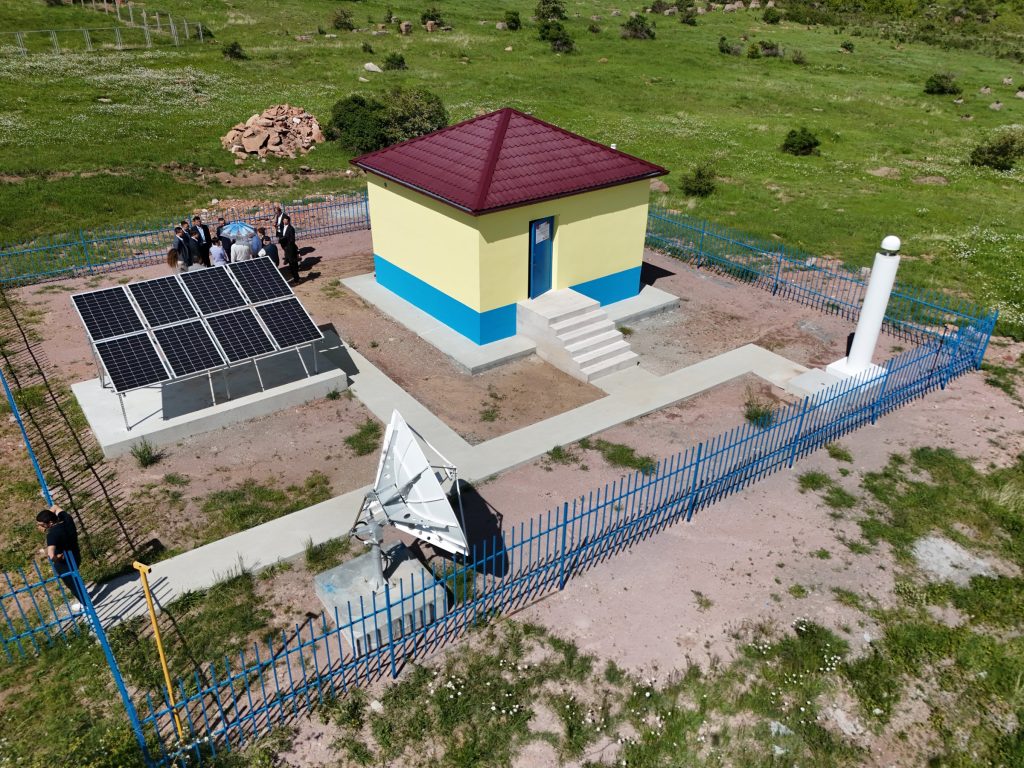
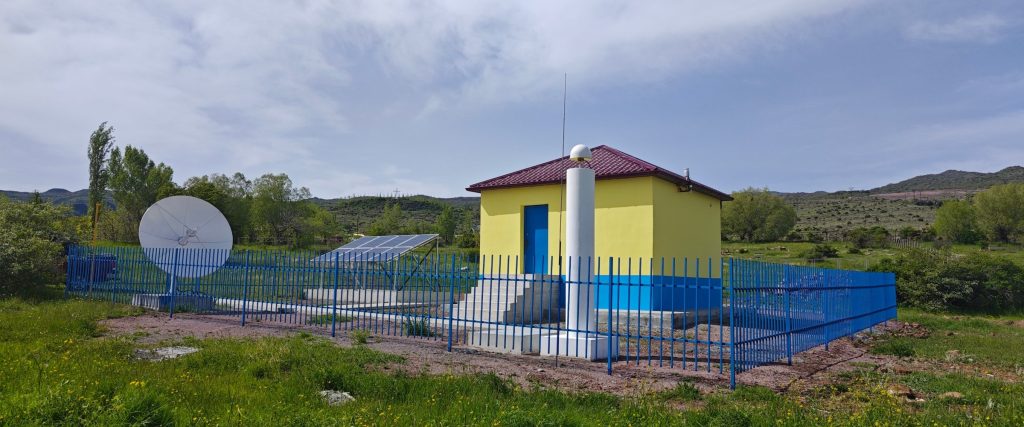
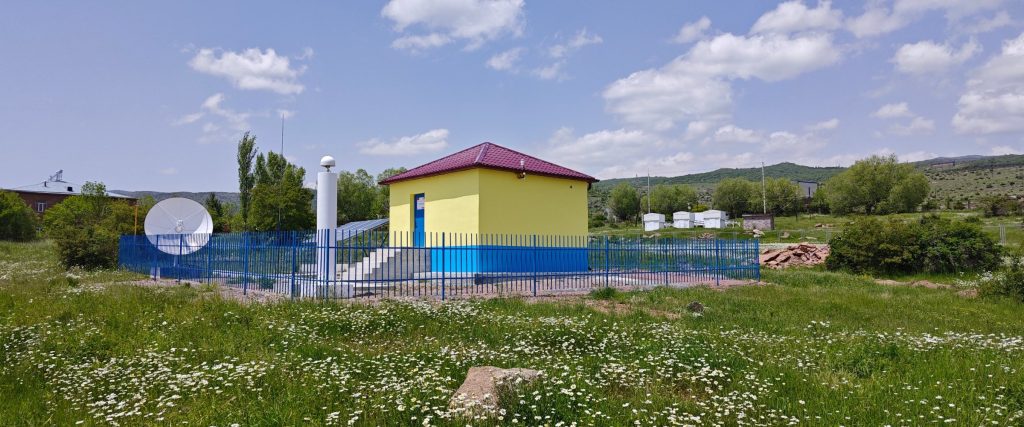
Like Shaghik, Byurakan is a complex station of the CHARNET network: seismometers in the instrument building, a GNSS antenna on a white pillar, solar panels and a satellite dish. Lying in the centre of Armenia, it hears earthquakes from every direction. On 1 November it recorded the earthquake on the Armenia–Georgia border, 98 km away, and a few days later the M 5.2 earthquake in Tajikistan, almost 2,500 km away.

Observatory facts: Byurakan Astrophysical Observatory; Wikipedia. Photographs: IGES.