Armenia · China · since 2018
From Beijing 2018 to a network across Armenia
From a meeting in Beijing in 2018 to a permanent seismic and GNSS network across Armenia: how the institute and the Institute of Geophysics of the China Earthquake Administration built CHARNET together.
The story
Timeline of cooperation
- 1959Science
A historical link
Beijing orders 20 multi-pendulum seismometers designed by Armen Nazaryan, long before the two countries built a network together.
Read more → - Dec 2018
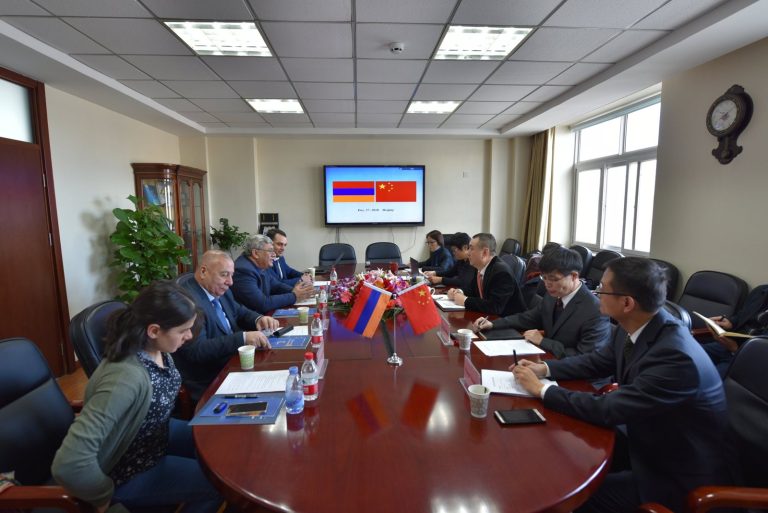 People & visits
Talks in Beijing
An Armenian delegation of the institute, the National Academy of Sciences and the Science Committee meets the China Earthquake Administration and its Institute of Geophysics. Cooperation begins.
Read more → - 2019
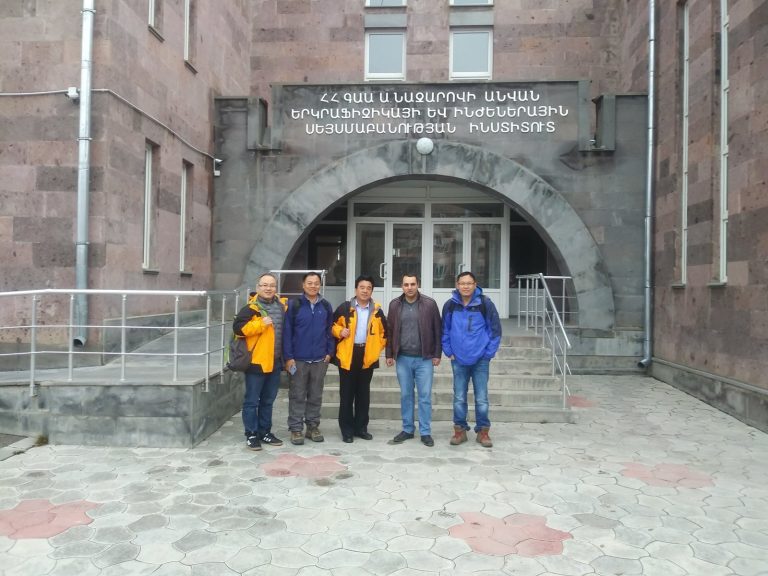 Network
Choosing the sites
Chinese and Armenian seismologists survey northern Armenia together and choose the sites for eight future stations. The China–Armenia International Laboratory for Earthquake Monitoring and Modelling is founded.
Read more → - 2020Science
First joint paper
Karapetyan J., Li L.: the magnitude of completeness, the smallest earthquakes recorded reliably across Armenia and neighbouring regions (Earth-Science Reviews).
Read more → - Mar 2021People & visits
Seminar in Gyumri
An international seminar with Armenian and Chinese specialists and the ambassadors of both countries prepares the new station network and its data centre.
Read more → - 2023Network
CHARNET is born
Work begins on CHARNET, the China–Armenia seismic, strong-motion and geodynamic network, FDSN code A6.
Read more → - 2024Network
Nine stations online
CHARNET becomes a permanent network of nine stations streaming data to the Gyumri data centre. A joint study on large earthquakes is featured on the cover of the Bulletin of the Seismological Society of America.
Read more → - Mar 2025Network
The first strong event
The network records the ML 4.8 earthquake of 8 March 2025 in the Lori region and its aftershock.
Read more → - 22–23 May 2025
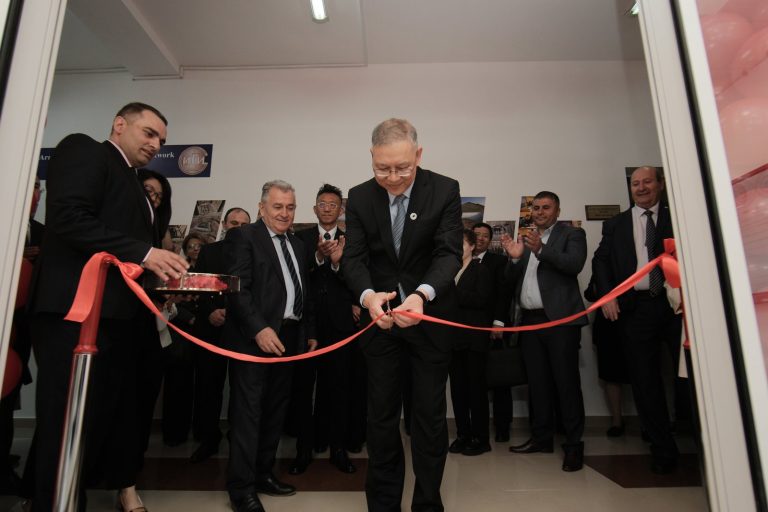 People & visits
The centre opens
The Armenian–Chinese seismic and GNSS network centre opens in Gyumri with Wang Kun, Administrator of the China Earthquake Administration, and Prof. Li Li. The next day the President of Armenia receives the delegation.
Read more → - Jun 2025
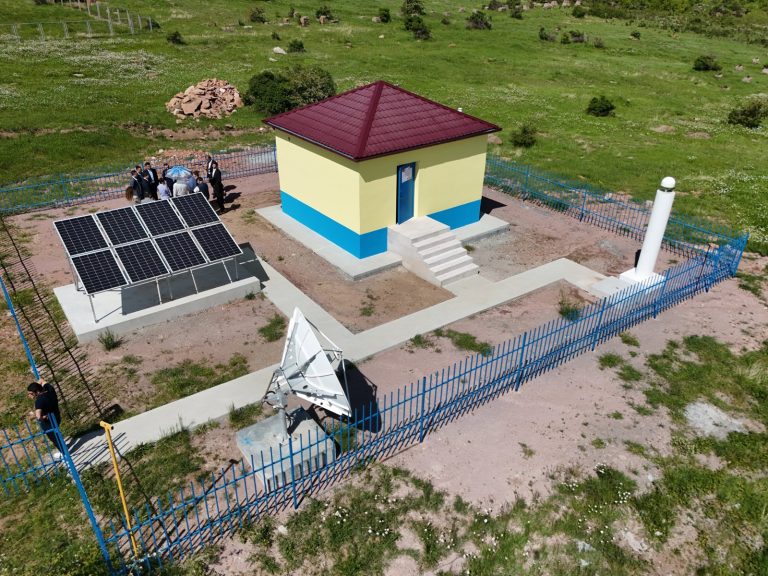 Network
100 earthquakes in five months
Data reach Gyumri over satellite and 4G links, the first use of satellite communication in Armenian seismology; artificial intelligence helps process them.
Read more → - Nov 2025Science
A joint research project
A joint Armenian–Chinese project on the seismic hazard analysis of major earthquakes in Armenia is approved.
Read more → - Mar 2026
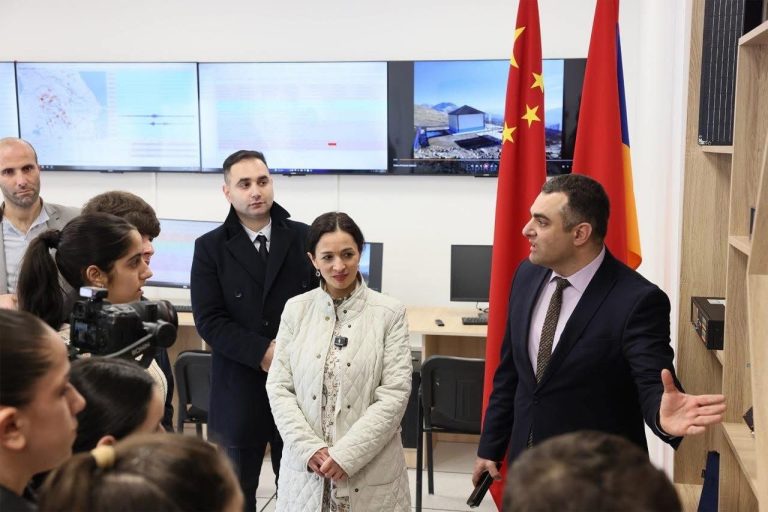 People & visits
Schoolchildren at CHARNET
The Minister of Education, Science, Culture and Sport and the Governor of Shirak visit the centre with pupils from the region.
Read more → - Oct 2026Network
Hearing Tibet from Armenia
Waves of the Mw 7.0 earthquake on the Tibetan Plateau cross more than 4,000 km of Asia and reach the CHARNET stations in about seven and a half minutes.
Read more → - Oct 2026
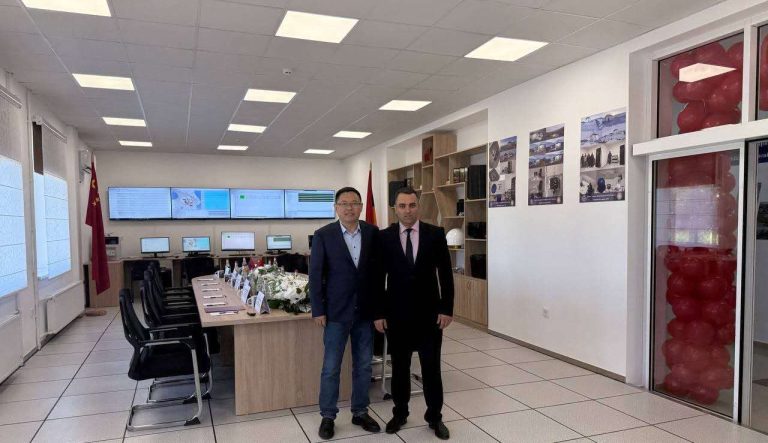 Science
Visiting professor in Beijing
Jon Karapetyan completes his visiting professorship at IGP-CEA: three joint papers submitted and a common roadmap from monitoring to seismic hazard and risk.
Read more →
The network
CHARNET stations
Click a station to see where it is and which earthquakes it has recorded in our news. Dashed lines show the data links to the Gyumri data centre.
Network A6 (CHARNET), doi:10.7914/vxbh-bb78. Map © OpenStreetMap contributors.