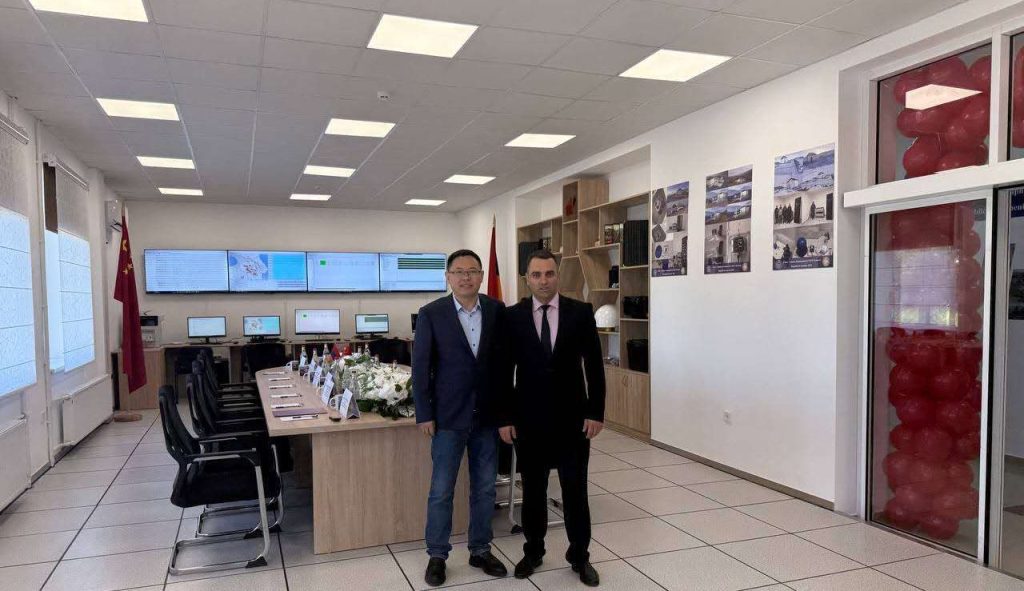
Jon Karapetyan and Associate Professor Wang Yongzhe in Armenia. Years of friendship and trust between Armenian and Chinese scientists have grown into shared seismic stations, joint papers and a common roadmap. This is how cooperation between peoples turns into concrete results.
On 26 October 2026 IGES Director Jon Karapetyan completed his work as a visiting professor at the Institute of Geophysics, China Earthquake Administration (IGP-CEA) in Beijing. The appointment was made under a joint Armenian-Chinese research project on the seismic hazard analysis of major earthquakes in Armenia, approved in November 2025.
The route
- BeijingIGP-CEA · Jiufeng · Baijiatuan · Yanqing
- HunanChangde · boreholes 2,800 m deep
- YunnanKunming · Dali
- Inner Mongoliaearthquake monitoring
Purpose of the work
The project brings seismology, engineering seismology and space geodesy into a single framework for seismic hazard analysis. Its basis is the data of the Chinese-Armenian seismo-geodynamic stations operating on the territory of Armenia. The aim of the stay was to turn these data into joint research and to plan the next stage of cooperation.
Joint research
The whole project was accompanied by Associate Professor Wang Yongzhe of IGP-CEA, a specialist in geodynamics and in modern InSAR methods for assessing coseismic deformation. He guided the joint research from the first day to the last and took part in all the field trips. Day-to-day work was also carried out with Xin Tian, Weiwei Xu and Jian Zhou of IGP-CEA. The work combined three lines of evidence: deformation of the Earth’s surface from InSAR and GNSS, the structure of the crust from seismic tomography, and the seismicity recorded by the networks.
The result is three papers in seismology and engineering seismology, now submitted to ranked international journals. We will present them once they are published. Jon Karapetyan also gave a lecture at IGP-CEA on the current seismicity of Armenia and the use of strong-motion data.
Observing systems across China
Together with colleagues Jon Karapetyan visited earthquake monitoring organisations and bureaus in Kunming and Dali (Yunnan), in Inner Mongolia and in Hunan, as well as stations around Beijing. The most remarkable was the deep borehole network of Changde in Hunan, where seismometers are installed at a depth of 2,800 m below the surface. At such depth the sensors are isolated from surface noise, so the network records very weak earthquakes.
Baijiatuan and the Zero Magnetic Space Laboratory
At the Beijing Baijiatuan Earth Science National Observation and Research Station, among the photographs on the wall, hangs a picture of the joint Chinese-Armenian field work of 2019, when sites were chosen for the new station network in Armenia.
Magnetic observations were also part of the programme: the Zero Magnetic Space Laboratory and the GM4 fluxgate magnetometers developed at IGP-CEA.
A fundamental scientific school
IGP-CEA combines fundamental research with major international projects in seismic safety. Its laboratories cover the whole chain from instruments to models: the institute develops its own observation equipment, such as the GM4 fluxgate magnetometers, and runs the Zero Magnetic Space Laboratory. The institute also trains students from different countries; they live on the campus next to the institute and work directly with its professors.
I was impressed by the organisation (the campus, from housing to a supercomputer system for a new level of seismological data processing) and the fundamental scientific strength of the institute. Here fundamental research and international projects in seismic safety go hand in hand with training a new generation of scientists.
Jon Karapetyan
Where seismology in China began
The visit included Jiufeng in Beijing, China’s first modern seismic station. It was completed in 1930 and run by Li Shanbang, China’s first modern seismologist; today the station is a museum of the history of seismic observation, from Zhang Heng’s seismoscope to drum seismographs.
Armenia in the Belt and Road seismic network
At IGP-CEA the Armenian stations are part of the Belt and Road seismic monitoring network. According to the institute’s exhibition, the network includes 33 integrated stations and 5 data centres in five countries, Armenia among them, together with geomagnetic observatories in Mongolia, Kyrgyzstan and Thailand.
Results and roadmap
The main result of the stay is three joint papers in seismology and engineering seismology, submitted to ranked international journals. They combine observations from Armenia with methods developed at IGP-CEA; we will present each of them once it is published.
Meetings with other professors of the institute also produced a joint roadmap for the coming years. It links three directions into one chain, from observation to decisions:
Roadmap · from observation to decisions
- MonitoringFurther development of the Chinese-Armenian seismo-geodynamic observations in Armenia and joint processing of seismic and GNSS data.
- ModellingCombining surface deformation from InSAR and GNSS with seismicity and crustal structure to understand how strain accumulates on the faults of Armenia.
- Seismic hazard and riskTurning these results into seismic hazard and risk assessment for Armenia, the main goal of the joint project.
Acknowledgements
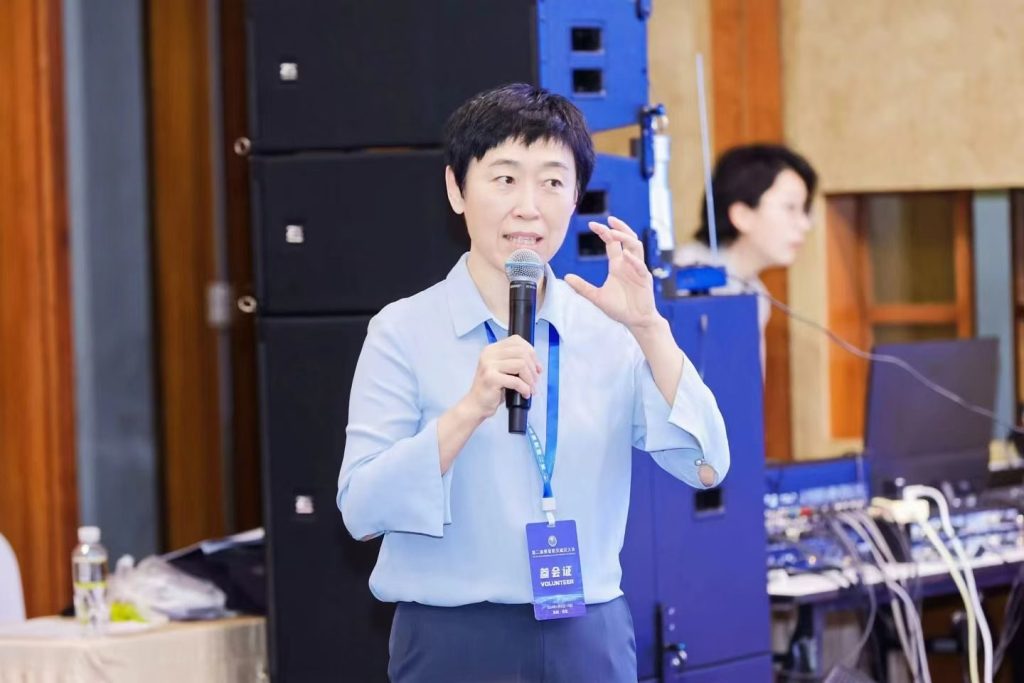
IGES expresses its special gratitude to Prof. Li Li for the invitation and for her support of Armenian-Chinese scientific cooperation.
For his professional work, which accompanied the entire project and made its concrete results possible.
For an intensive and productive time together.